
GPTGirlfriend


 Loading...
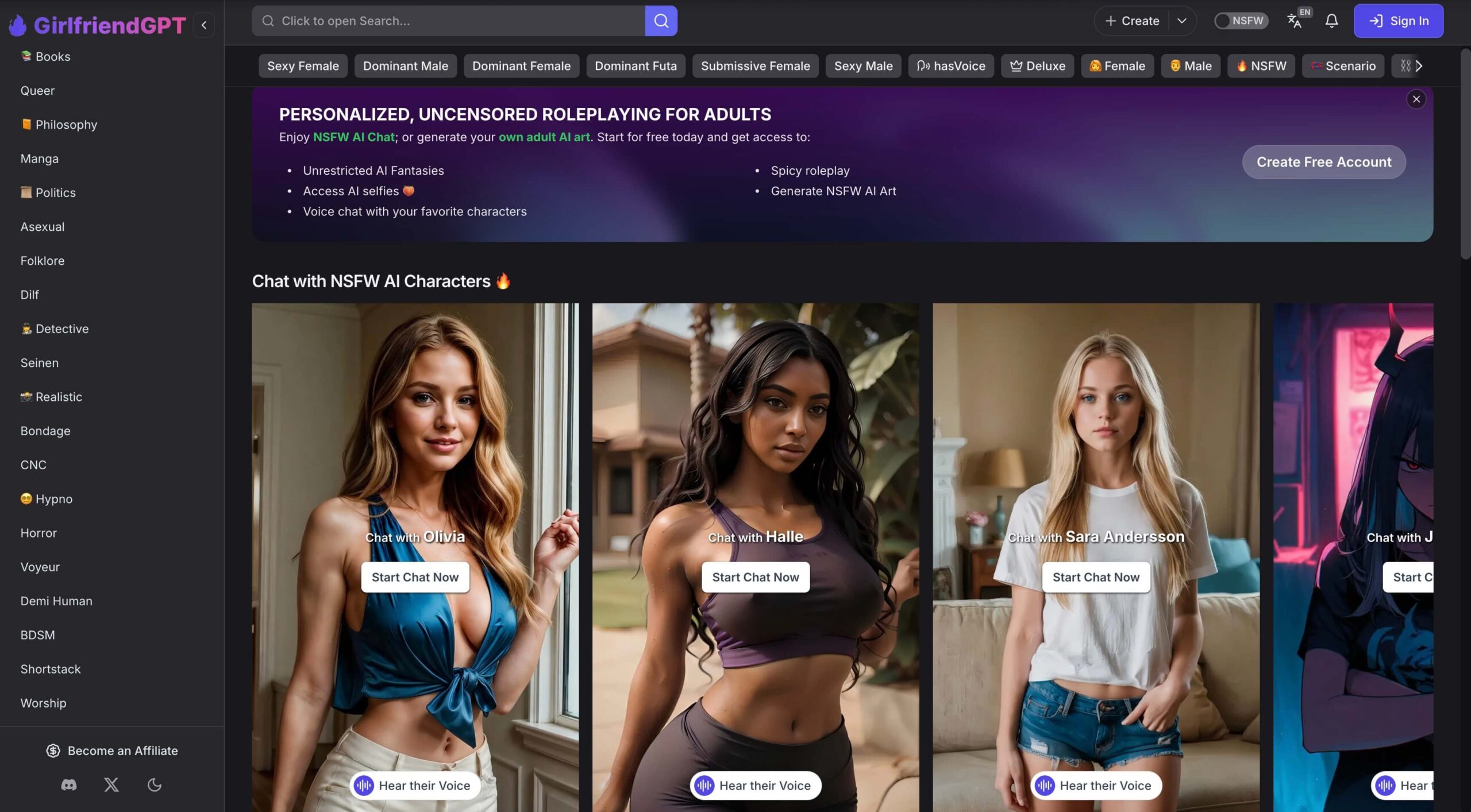
GPTGirlfriend feels less like a finished destination and more like something you shape as you go. You don’t just pick a character and start talking — you decide who that character is supposed to be. How they think, how they respond, what kind of presence they have. That part feels central. The platform gives you room to experiment instead of locking you into a single personality.
Some people will probably come to it looking for a sense of connection, but it doesn’t have to stop there. It can just as easily feel like a creative space. You’re writing a character, testing how they speak, nudging conversations in different directions. The visuals add another layer — whether you lean toward stylized art or something more realistic, it’s all part of building a consistent world around the character.
What stands out is how open-ended it is. There’s no single “right” way to use it. One person might treat it like an ongoing story, another like a writing exercise, someone else like a quiet place to talk. The system adapts to that rather than pushing a fixed experience.
AI companions are still a new idea, and platforms like GPTGirlfriend feel very much part of that early stage. It’s not perfect, but it’s interesting — less about replacing anything real, more about exploring what personality, conversation, and imagination look like when you’re allowed to design them yourself.


