Fetlife


 Loading...
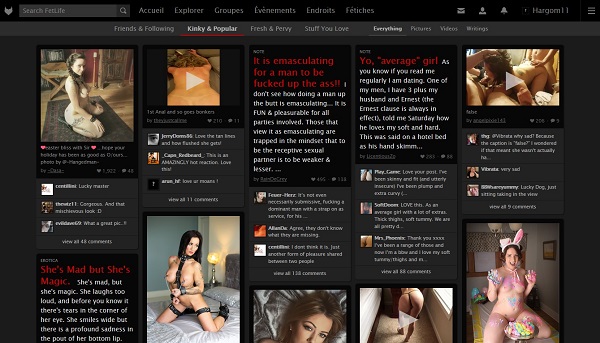
Fetlife doesn’t really feel like a website you “watch.” It feels more like a community you step into. You make a profile, list what you’re curious about or involved in, and then you start seeing people, groups, and conversations that overlap with that. It’s closer to an old-school social network than anything else.
What stands out is how local it feels, even though it’s global. You’ll see events, discussions, and groups tied to specific cities or regions, which makes it feel less abstract and more real. Some people are clearly just exploring, others have been around for years and treat it like a long-term space to talk, learn, and connect. That mix gives the site a very lived-in feeling.
A lot of the activity is about conversation rather than visuals. People share experiences, ask questions, talk about boundaries, safety, relationships, and identity. Photos are there too — a lot of them — but they feel secondary to the social side. You don’t have to pay to participate in most things. A free account lets you join groups, comment, message, and see what’s happening nearby.
There are paid features, mostly for people who want extra access or just want to support the platform, but they’re optional. You don’t feel locked out without them.
Overall, Fetlife feels less like a content site and more like an ongoing gathering place. It’s structured, active, and clearly important to the people who use it. If someone is interested in learning, discussing, or connecting within alternative relationship or kink communities, it’s one of the few places online that actually feels built for that purpose.